BNCC
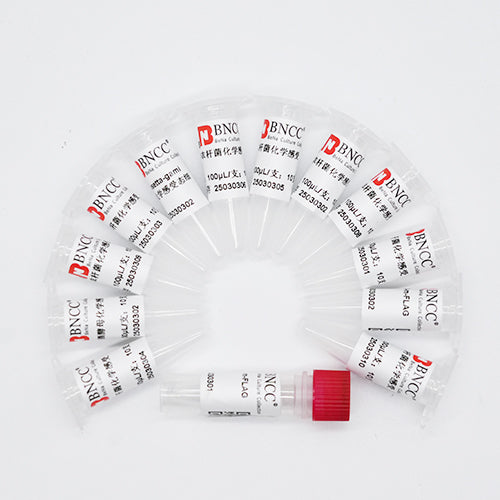
BL21 CodonPlus (DE3)-RIPL Chemical Competent Cell
SKU 383881
Bioware
A genetically modified microbial culture carrying defined recombinant characteristics for controlled experimental use.
Suitable for molecular biology workflows, expression studies, method verification, and laboratory quality control.
Technical Specifications
| Organism | BL21 CodonPlus (DE3)-RIPL Chemical Competent Cell |
|---|---|
| Material Type | Recombinant Microbial Strain |
| Preservation Form | Frozen vial tube |
| Culture Method | 1. BL21 CodonPlus (DE3) - RIPL chemocompetent cells are placed in ice to melt (or let go of the heart or room temperature for a moment, quickly insert into the ice when the bacterial cells are in a mixed state of ice and water), add target DNA (granules or connection products) and gently mix by hand at the bottom of the EP tube. Let it stand on ice for 25 minutes. Heat shock in a 2.42 °C water bath for 45 seconds, quickly place it back on ice and let it stand for 2 minutes. Shaking will reduce the conversion efficiency. 3. Add 0.9 mL of room temperature LB medium to the centrifuge tube. Resuscitate at 4.30 °C and 225 rpm for 90 minutes. When the plasmid contains unstable fragments, culturing at 30 °C can reduce the probability of erroneous recombination. If the transformation efficiency is calculated by transforming ControlPUC19, it needs to be revived at 37 °C and 225 rpm for 60 minutes. )Centrifuge at 5.5000rpm for one minute to collect the bacteria. Take about 100 μ l of supernatant and gently blow and resuspend the bacterial blocks onto LB medium containing the corresponding antibiotics. 6. Invert the plate and incubate overnight in a 30 °C incubator. If the conversion efficiency of ControlPUC19 is calculated, it needs to be cultured overnight at 37 °C. 1. Place the competent cells in ice to melt (or let go of the heart or room temperature for a moment, and quickly insert them into the ice when the bacterial cells are in a mixed state of ice and water), add the target DNA (plasmid or ligation product), and gently mix by hand tapping the bottom of the EP tube. Let it stand on ice for 25 minutes. Heat shock in a 2.42 °C water bath for 90 seconds, quickly place it back on ice and let it stand for 2 minutes. Shaking will reduce the conversion efficiency. 3. Add 700 μ l of antibiotic free sterile culture medium LB to the centrifuge tube, mix well, and resuscitate at 37 °C and 200 rpm for 60 minutes. Centrifuge at 4.5000rpm for one minute to collect the bacteria. Take about 100 μ l of supernatant and gently blow and resuspend the bacterial blocks onto LB medium containing the corresponding antibiotics. 5. Invert the plate and incubate overnight in a 37 °C incubator. If performing blue and white spot screening operation, incubate the plate at 37 °C for at least 17 hours |
| Culture Conditions | 37 °C; 18-24h; aerobic |
| Provided Formats | Frozen vial tube |
| Culture Medium No. | 384134 |
| Culture Medium Name | LB Medium with 50μg/mL Streptomycin, 20μg/mL Tetracycline, and 50μg/mL Chloramphenicol |
| Culture Medium Composition | Yeast extract:5.0g, Peptone:10.0g, NaCl:10.0g, Agar:15.0g, Streptomycin:50µg/mL, Tetracycline:20µg/mL, Chloramphenicol:50µg/mL, pH:7.0±0.2(25°C) |
| Pack Configuration | 10 tubes |
|---|
| Application | Molecular biology research, recombinant DNA studies, method development, and laboratory research. |
|---|---|
| Storage Conditions | -80 °C |
| Country of Origin | China |
Documents
The Certificate of Analysis (COA) is issued for the applicable batch or lot and is available upon request.